I have learned a few things about sheep over the years. Some of them from books, some from Scripture, and some from a farmer named Mr. Fesperman, who had a farm near my parents’ retirement home in rural North Carolina.
Mr. Fesperman had sheep. And if you ever get the chance to spend time with someone who raises sheep, take it. You will learn things you never knew you needed to know about sheep. For instance, did you know sheep have rectangular, almost square-shaped pupils? Their eyes are designed to give them a wide field of vision, which is pretty handy when you are a relatively defenseless animal who might be someone else’s lunch.
Sheep also have no upper front teeth. Instead, they have a tough dental pad that helps them pull and chew grass. (So, if you have ever been told you have a sheepish grin, now you have something to think about.)
Mr. Fesperman also told me that his sheep knew his voice. When he called out “Nanny,” they recognized him and came running. Sheep can recognize individual faces, remember people for years, and even recognize human emotions. They form friendships, develop strong bonds, and seem to have their own little social circles. Apparently, sheep are much better at remembering their friends than some of us are at remembering where we left our car keys.
And then there was Mercy.
Mercy was a special sheep. She had a personality, a presence, and a way of connecting with Mr. Fesperman that was different from the others. She brought him love. Not because she could do anything particularly useful for him, not because she was especially productive, and certainly not because she could contribute to the farm’s bottom line. She brought him companionship, affection, and a relationship that mattered.
Which brings me to Jesus’ story about sheep and goats.
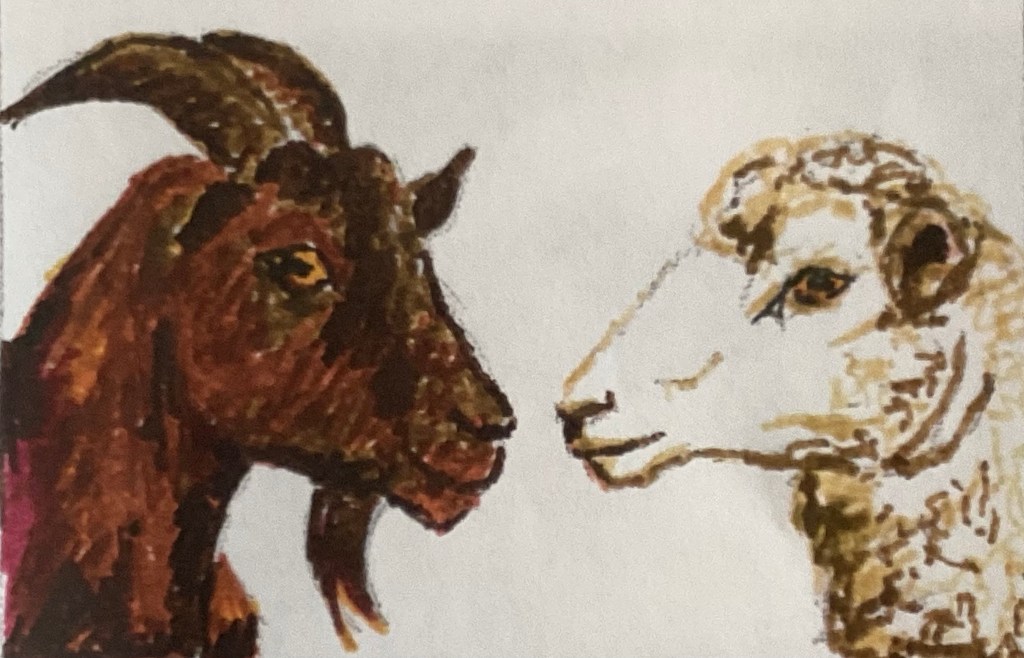
In Matthew 25, Jesus tells a story about the day when all the nations will be gathered before him. He separates people like a shepherd separates sheep from goats. The sheep are placed on his right and the goats on his left.
To the sheep, he says:
“For I was hungry and you gave me food, I was thirsty and you gave me something to drink, I was a stranger and you welcomed me, I was naked and you gave me clothing, I was sick and you took care of me, I was in prison and you visited me.”
The sheep are confused. They have no idea when they did any of these things for Jesus. When did they feed him? Visit him? Welcome him? When did they see him hungry or thirsty?
Jesus answers, “Truly I tell you, just as you did it to one of the least of these…you did it to me.”
The goats, on the other hand, are equally surprised. They didn’t recognize Jesus either. They missed the opportunities to care for the hungry, the stranger, the sick, and those in need.
I’ve always found it interesting that neither the sheep nor the goats seem to recognize Jesus in the people standing right in front of them.
The sheep weren’t keeping score. They weren’t volunteering because they thought Jesus was watching, or because they were hoping to earn a few extra points in the eternal rewards program. They simply responded to the needs around them. They fed someone who was hungry. They welcomed someone who was lonely. They cared for someone who was sick.
They loved.
And perhaps that’s what Mr. Fesperman taught me about sheep, too.
Sheep recognize faces. They remember voices. They develop friendships and deep connections. They know when someone cares for them. Mercy didn’t bring Mr. Fesperman love because she accomplished something extraordinary. She brought him love because of the relationship they shared.
Maybe that’s a little glimpse of what Jesus is getting at in Matthew 25.
Faith isn’t simply about knowing the right answers, attending the right worship services, or memorizing the right Bible verses. It’s about recognizing the people around us. It’s about seeing their faces, hearing their stories, remembering their names, and responding with compassion.
It’s noticing the person who needs a meal, the stranger who needs a welcome, the neighbor who needs a friend, the person who is grieving, and the one who simply needs someone to show up.
And here’s the thing: Jesus tells us that when we do these things for one another, we are doing them for him. We don’t always recognize Jesus in the people around us. Sometimes we are too busy, too distracted, or too caught up in our own little pasture. Sometimes we walk right past someone who needs us.
But what if we started paying a little more attention? What if we learned to recognize faces, remember names, listen for voices, and notice the emotions behind the smiles? What if we became a little more like sheep who know their shepherd and a little less like goats who wander off in their own direction?
Because the kingdom of God isn’t built by people who keep score. It’s built by people who love. And sometimes a sheep named Mercy reminds us that love doesn’t have to be complicated. It just has to be shared.
So, the next time you see a sheep, remember: square eyes, no upper front teeth, surprisingly good memories, and a capacity for deep friendship. Not bad for an animal that spends most of its day eating grass. And perhaps not a bad example for the rest of us, either.
Art Work by Jordan Kammer Mesenbourg

