There are some things you should never bury. Your grandmother’s china. The Christmas presents you bought in July and then forgot where you put them. That mystery casserole in the back of the refrigerator. And, according to Jesus, your talents.
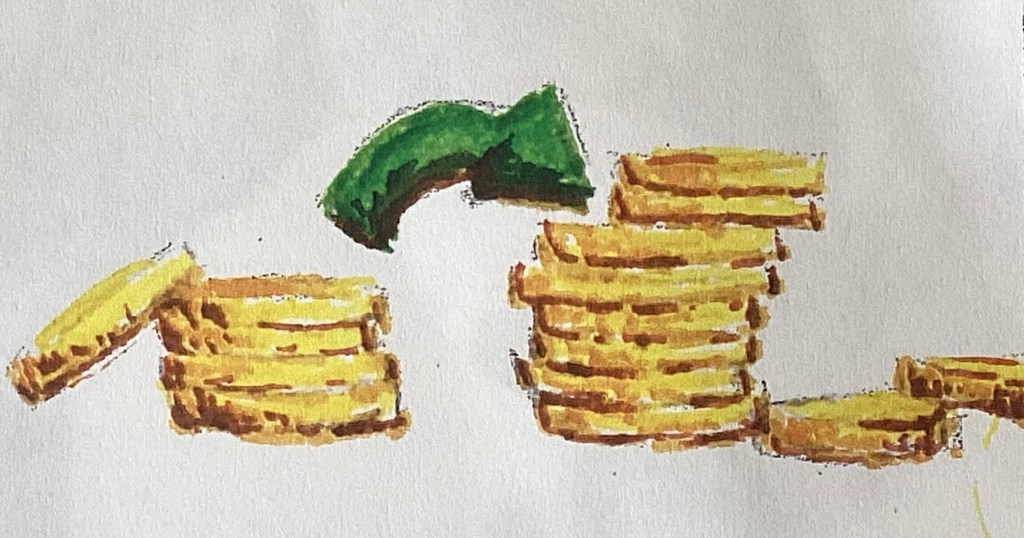
In Matthew 25:14–30, Jesus tells a story about a man going on a journey who entrusts his property to three servants. To one, he gives five talents; to another, two; and to the third, one. A talent was an enormous amount of money, not a special ability to sing, dance, bake an award-winning pie, or juggle flaming torches (although those can be useful gifts, too!).
The first two servants put their money to work and double what they were given. The third servant, however, digs a hole and buries his talent. Apparently, he thought the safest investment strategy was real estate: one hole, no risk, zero growth.
When the master returns, he celebrates the first two servants for using what they were given. But the third servant offers an explanation rooted in fear. He was afraid, so he hid what belonged to his master. And the master is not impressed.
Here’s where the story gets interesting. Jesus isn’t simply telling us to be productive, make money, or turn life into one giant competition. This is a story about what we do with what has been entrusted to us.
And we’ve been entrusted with a lot more than money.
We have gifts, time, relationships, experiences, knowledge, opportunities, and resources. Some of us have five talents, some two, and some one. The point isn’t how much we have compared to someone else. The point is what we do with what we have.
Think about relationships. What happens when we don’t invest in them? Friendships fade when we don’t make the phone call, send the text, invite someone for coffee, or remember that we’ve been meaning to get together since 2019. Families become disconnected when we stop making time for one another. Neighbors remain strangers because nobody wants to be the first to wave. (And let’s be honest, sometimes we pretend not to see someone at the grocery store because we’re not emotionally prepared for a conversation.)
Relationships need tending. You can’t plant a friendship, stick it in a hole, and expect it to flourish.
What about our experiences? We’ve all learned something along the way. Maybe we’ve walked through grief, raised children, navigated a difficult season, changed careers, or made a few spectacular mistakes. Those experiences can become gifts when we share them. Our stories can offer encouragement, understanding, and hope to someone who is walking a similar road. Sometimes the very thing we thought we would never want to talk about becomes the thing that helps someone else feel less alone. That’s a talent worth investing.
And then there’s time. We all get the same 24 hours in a day, although some people seem to have discovered a secret 25th hour. What happens when we never make time for the things that matter? When we don’t visit someone who is lonely, listen to a friend, volunteer, teach a child, pray, or simply sit with someone who is hurting? Time spent scrolling through our phones doesn’t always count as investing in relationships. (Even if we did learn that our neighbor’s cousin’s dog has a birthday.)
Our gifts and resources work the same way. A person who loves to teach can help children discover faith. Someone who knows how to fix things can help a neighbor or maintain the church building. Someone with a gift for hospitality can make a newcomer feel welcome. Someone who can organize just about anything can make a ministry happen. And someone who has financial resources can help feed hungry families, support missionaries, and sustain the ministry of the church.
And yes, that includes our financial offerings. Church ministry doesn’t happen because the lights magically turn on, the Sunday School curriculum appears, or the pastor’s paycheck arrives by divine delivery service. (Although I suspect a few church treasurers would appreciate that arrangement!) When people don’t pledge or give, programs become harder to sustain, outreach becomes limited, and pastors and church workers may lose their jobs. Financial gifts help make ministry possible. They put our love for God and our neighbors into action.
But I think there’s another part of this parable worth considering: fear.
The third servant was afraid. Fear convinced him that doing nothing was safer than taking a risk. And isn’t that sometimes what happens to us? We worry we don’t have enough time, enough money, enough experience, or enough to offer. We convince ourselves that someone else will step up, someone else will make the call, someone else will volunteer, someone else will give.
We tell ourselves we’ll get around to it someday. We’ll visit when things slow down. We’ll volunteer when the calendar isn’t so full. We’ll give when we have a little more. We’ll share our story when we’re ready. We’ll call that friend next week.
And before long, next week becomes next month, next month becomes next year, and the gifts we were given are sitting in a hole in the ground.
Fear has a way of shrinking our world. It keeps us from sharing our time, investing in relationships, offering our abilities, and supporting something bigger than ourselves. The irony is that what we are trying so hard to protect can eventually become something we lose the opportunity to use.
Jesus’ parable is an invitation to live differently. Not out of fear, but out of faith. Not out of scarcity, but out of generosity. Not by comparing what we have with what someone else has, but by asking what we can do with what God has placed in our hands.
The church doesn’t need everyone to give the same amount, volunteer the same hours, or have the same gifts. The world doesn’t need us to be experts at everything. It needs us to participate. To show up. To share. To love God and love our neighbors with what we have.
So take a look at what you’ve been given. Your gifts. Your time. Your relationships. Your experiences. Your resources. Are you using them? Are you investing them? Are they making a difference?
The goal isn’t to arrive at the end of our lives with everything safely tucked away, untouched and unused. The goal is to have something to show for the love we’ve shared.
And please, for the love of all things holy, don’t bury your talents. Or your time. Or your relationships. Or your offerings. There’s too much love to share, too much ministry to do, and too many neighbors to love.
Besides, nobody needs another hole in the backyard!

