I love a good story. Especially one with a surprise ending. I also love a good mystery—unless I figure out the ending too early. Then I spend the rest of the movie or reading the book sitting there thinking, Come on, people. It’s obvious.
That’s the thing about foreshadowing. Writers give us little clues about what is coming. A character suddenly says, “I have a bad feeling about this.” Someone notices the basement door is mysteriously open. The camera lingers a little too long on the creepy knife sitting on the kitchen counter. And we think, Well, that can’t be good. Foreshadowing is storytelling’s way of saying, “Pay attention. This will matter later.”
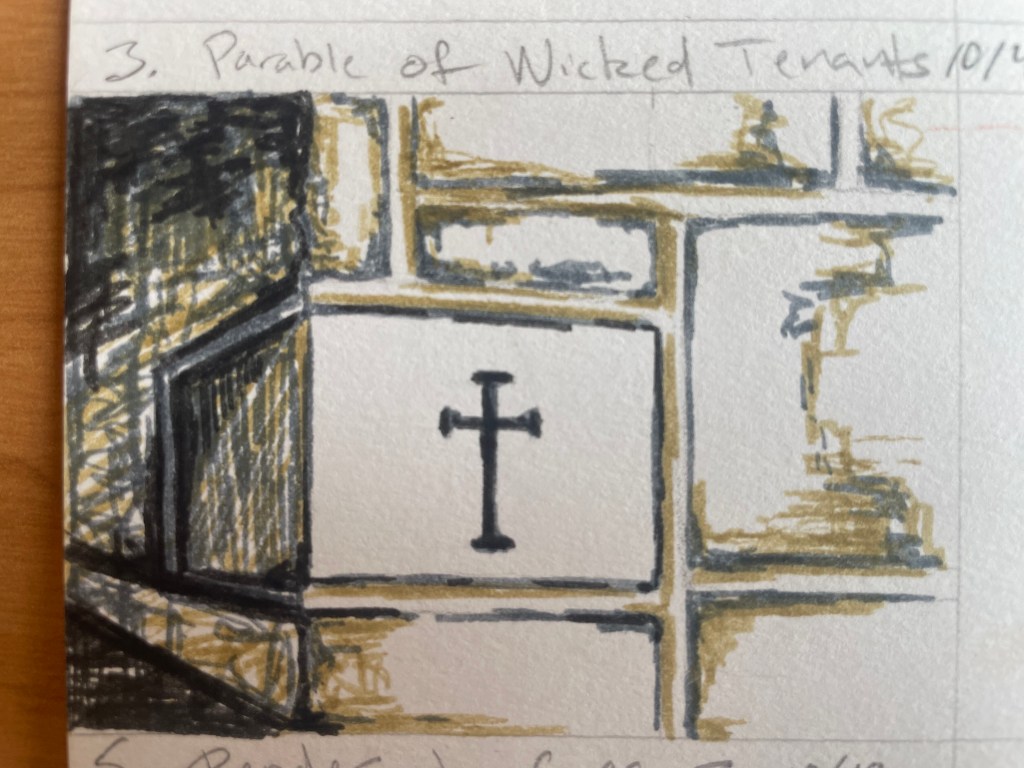
Jesus was a master storyteller. And in Matthew 21:33-46, he tells a story that is basically one giant piece of foreshadowing. It’s a tale about a landowner who plants a vineyard, builds a fence, digs a winepress, and rents it out to tenants. When harvest time comes, he sends servants to collect what belongs to him. The tenants beat one servant, kill another, and stone another.
So the landowner sends more servants. Same result. Finally, the landowner sends his son. And here comes the giant flashing neon sign of foreshadowing: “They will respect my son.” Except they don’t. They see the son and say, essentially, Hey! This is the heir. Let’s kill him and take everything. If this were a movie, we would be yelling at the screen: DO NOT GO INTO THE VINEYARD!
But Jesus isn’t simply telling a story about some really terrible vineyard tenants. He is telling a story about himself. The religious leaders listening to Jesus would have understood the clues. The servants point toward the prophets who had been rejected and killed. The beloved son points toward Jesus. And the vineyard becomes a picture of God’s people.
Jesus is foreshadowing his own death. And that is what makes this story so powerful. Jesus knows what is coming. He knows the cross is ahead. He knows rejection is coming. He knows suffering is coming. And he keeps walking toward it. There is something almost startling about that kind of courage. Jesus isn’t wandering into the future unaware. He sees what is coming and continues toward the people he came to love.
It reminds me of those moments when you can see trouble coming from a mile away. You know the toddler is going to touch the wet paint. You know the dog is going to steal the sandwich. You know that saying, “This probably isn’t going to end well,” is usually followed by evidence that you were absolutely correct.
Sometimes we wish knowing the future would help us avoid it. But Jesus shows us something different. Knowing what is coming doesn’t always mean running away. Sometimes faith means walking toward what is hard because love is calling us there. The cross is not an unfortunate plot twist. Jesus has been foreshadowing it all along. And somehow, even knowing the ending, we keep turning the pages.
Because the story doesn’t end with death. The story ends with resurrection. And that is the ending Jesus is leading us toward. Not power that crushes. Not violence that wins.
But love that refuses to let death have the final word.
Artwork by Jordan Messenbourg

