According to Rev. Dr. Len Sweet, my paper resonated with what we are studying in semiotics, church, and culture.
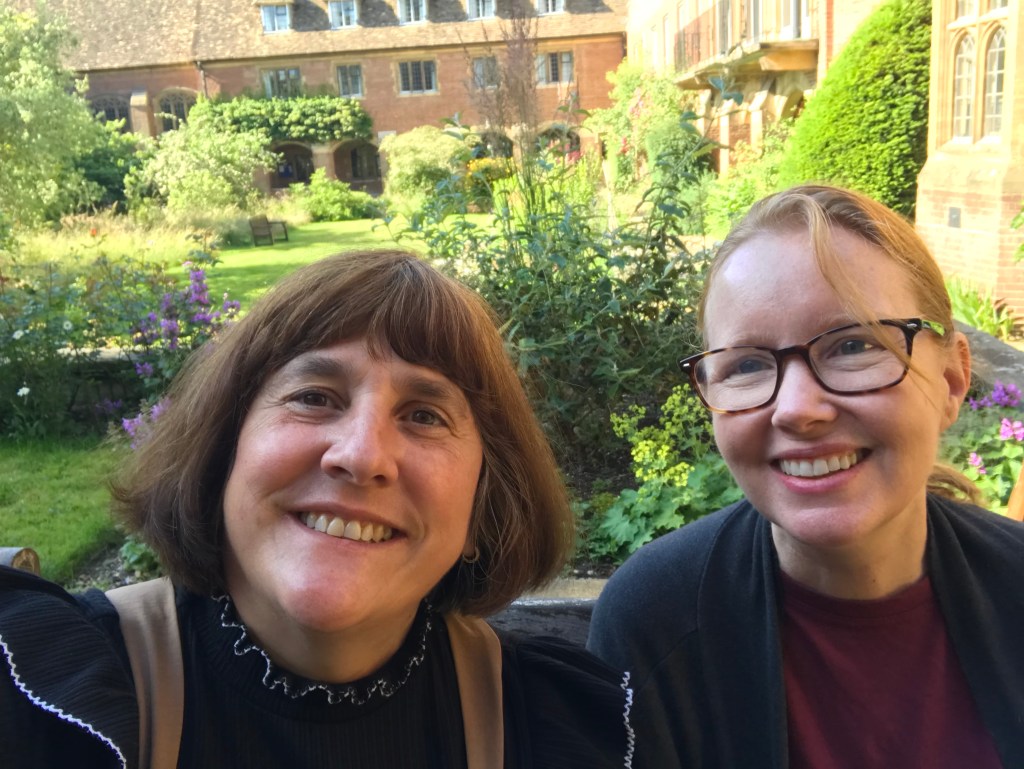
Check out what I have learned:
Introduction
A couple of years ago, I had a semiotic experience in Target with this woman, Ilene. I did not know Ilene, but we shared niceties in the line. Once I paid and was about to leave, she called my name, which I never told her, and she said she had some things to tell me.
She said, “Heather, one day you will be doing something in Oregon or Northern California! Thus says the Lord!”
I blurted out “Excuse me. But what did you say?And by the way, how did you know my name?”
Ilene repeated her words: “Heather, I am a prophetess, and God wants you to know that you will be doing something one day in Oregon or Northern California! Thus says the Lord!”
I asked with perked curiosity, “What else does God want to tell me?” After all, she knew my name, and we had never met before nor did she know my secret desire to live or do something in Oregon.
The prophetess said, “Heather, you have the gift of storytelling – use it! When you call the children forward in church, and teach the congregation God’s story, the Holy Spirit takes control of you, and the people listen. Thus says the Lord.”
I asked why God is telling me this now in Target, to which she responded with “God wants you to get off the couch and start writing down your stories. Thus says the Lord.”
I never knew Ilene before that moment. She had no idea of my name, that I am a children’s pastor, and that I am a story curator. Our paths never crossed before to my knowledge. She was a pastor of an AME church, 20 years my elder, and different skin tones. But, she was right. I had plateaued in my ministry, and I was also vegging out on the couch.
Why I share this semiotic experience is because Ilene jumpstarted me to do a few things: (1) this blog was created, where I have collected stories from congregations and God is at work in the church. God is always up to something, and I like to write about it. (2) Sparkhouse Publishing contracts with me to produce new curriculum around children’s church, (3) and now, I am in school in Oregon. Rev. Dr. Rich Melheim heard this story from me about Ilene, and said, “Have you thought about studying under Professor Len Sweet at Portland Seminary/ George Fox University?” It was the sign I had been waiting for.
If you don’t know, semiotics is the study of signs and symbols, and in conjunction with church and culture has been a perfect fit for me. Below are some examples of what has impacted me the most from readings and discussions:
Be Present
“But the main thrust of the book [Revelation] is not to predict what will happen in the future, at least not until the end. It is to show disciples what is really happening in the present.” My temperature runs at an active pace, so I am always looking ahead to the next project or sermon. Wilson and Henri Nouwen have reminded me that what matters most is to be present in the process of my program and to let the process lead the work. Sitting still, listening, and waiting are hard for me, but I have been trying to live into the present more.
Be Playful
I am working on a book that focuses on play in worship. Why is that needed? Because “…most former mainliners’ stories [said]…’It wasn’t much about religion or God, as it was all about community’; we didn’t really do much prayer; or bland.’” People need to be reminded that they are children of God. Never once does God say, “My dear mature adult.” Being playful does not mean childish; its goal is to open the door to imagination. A church that plays together, stays together.
Be Story-Minded
Here is a question I loved from the readings, “Why… should it be that ’story’ has a space in this divine human dialogue?” Two reasons: One, people are wired to share stories, and they have been since the beginning of time. Storytelling is innate to humans. Two, the Bible does not start with salvation, it starts with a story, creation. God knows how to tell a good story for the good of all, and we need to be story-minded about our role in creation to share God’s story.
Be Scared
“For a church leader, the dawning reality of the digital age is that the Sunday sermon is no longer the prime educational diet for many of our church participants.” This should scare church leaders. If people are not getting their needs met with the sermon or worship, that means they are turning to google or AI to find what they are looking for, and there is some really bad theology out there. The digital age is not going away; the church needs to embrace it with confidence.
Be EPIC
“[The early church] knew that worship services were to glorify God and edify the faithful, not to evangelize outsiders.” The church has somewhat lost this focus because of the financial strain on congregations. Sometimes people focus more on the “butts and bucks” in the pew than the healing of God in worship or praising God. With the new Gen Zers coming into adulthood, church leaders need to start thinking about EPIC worship (experiential, participatory, image-rich, connected). After all, experiences are how young couples spend their time; it is the newest commodity.
Be Very Good
“On each of the first five days of creation, ‘God saw that it was good.’ On the sixth day, with the creation of humanity, it was ‘very good.’ All of creation is ‘good,’ but humans are, in the eyes of God, ‘very good.’” I have never made that distinction before, that humans were called “very good” by God. This enlivens the soul to do what is just and right, to live out our creative selves, and to be reminded that we delight God. Or as we talked in our discussion, “we are the smell of Jesus to others and to God.” Faithfulness has a smell, and that is mindblowing.
Be Trusting
Learning to trust is one of the hardest things for a person to do. As a self-doubter, I have trust issues. When teaching my dog to obey, my trainer said, “Trust your dog! He will get there.” Myers says, “Trust yourself.” Other people have told me to “trust the process.” Leaning into trust might be one of the greatest moves I make in this program. Trust that I can finish the project, trust that God is calling me, and trust that one day my dog will sit when I say it.
Be Open-minded
Downing was an incredible read for me. She writes:
“…different Christians idealize different pasts.”
“To denounce any Christian tradition limits the Spirit by implying that only one form of relationship is possible with God.”
“Because Christian denominations appeal to different pasts to validate diverse practices, two problems arise, connected like opposite sides of the same coin:
- Pronouncing the superiority of one particular idealized past
- Denouncing the immediate past”
It is so easy for church leaders to think their doctrine is the only way to worship, to be the church, or to be right. Last Christmas, I read an article about this man who made it his purpose in life to tell kids that Santa was not real. He did this by going to malls where there is a Santa Claus, and he would stand at the exit and yell at families. Is this an open-mind? Is this love? Is this his business? He made it his business, and he told people that only “Jesus is the reason for the season.” Jesus had a language that spoke of love. I think sometimes we miss the point of the way of Jesus, because we feel that only our agenda is right.
Be Welcoming
“Like a person, a place should carry a strong sense of identity. Identity is shaped by the values it represents and upholds. In other words, it needs to stand for something.” Sometimes churches use their spaces to say things like “All are welcome” or “Come as you are.” But they forget to affix an asterisk next to it that says, *only if you look like us, only if you worship our way, you are welcome here only if you are not gay, a woman, transgendered, dirty, colored hair, or a misfit, or only if you are not [fill in the blank]. “All are welcome” will be the demise of the church unless we really do what we say. The church needs to be clear about its identity rooted in Christ, and remember that he ate at tables with sinners and tax collectors. What needs to shine in our churches are the gifts of the Holy Spirit that reflect actions and attitudes more than types of people: “love, joy, peace, forbearance, kindness, goodness, faithfulness, gentleness and self-control.” These are the stories our buildings should speak.
Be a Missionary
“Mission is not an activity of the church but an attribute of God. God is a missionary God. Jesus is a missionary Messiah, and the Spirit is the missionary Spirit. Missions is a family business.”
“Every life is a missionary life…We’re all here on assignment.”
Ain’t that the truth? People do not need to go far away to share God’s Good News of love for this world found in Jesus Christ. I tell my families that being a parent is a calling, and that their children are the mission field. Their assignment is to fulfill their baptismal promises: bring them to church, to teach them the commandments, creeds, and Lord’s Prayer, to participate in the Lord’s supper, to strive for justice and peace, and to follow Jesus. That is important missionary work.
Be a Detailed Preacher
Sometimes preachers think they are the most important thing that will happen on a Sunday morning. But in reality, “…all preachers are insufficient.” As Martin Luther would say, “This is most certainly true.” In reality, many sermons I have heard like to add jokes, or have illustrations that do not have anything to do with the story, or are all law and no gospel. But, all we need to preach is God’s story. It is enough. Preachers need to look for “God in the details.” I think about Ken Burns when he was making his docuseries on the Civil War. He panned over old photos to focus on an everyday item into the story. God’s story is filled with details that get skimmed over, so the preacher can get a word in about truth or peace. Even as insufficient as we are, we are called into the details, and there we will find God.
Be a Listener
Everyone loves a good story. Sometimes we are called to share stories, but maybe more importantly in this divisive time, pastors are called to be better listeners. “Storytellers use structure to take viewer/ reader/ participant – we prefer ‘storyreceiver’- on the journey.” As pastors, we have storyreceivers when we preach. Our job is to administer the sacraments and to preach “Jesus died for you.” We are not responsible for how it lands on the storyreciver. Some will respond to “Jesus died for you” with “Thank God he did!” and others with “I never asked him to!” Everyone is somewhere on that spectrum between the two responses on their journey. One thing we can do is be a good listener to what is going on in their lives to understand their response. Storyreceivers are crucial to the church.
Be Faithful
“Secular spirituality also belongs to the history of faith.” Secular spirituality is about relying on the inner peace one has instead of placing their faith in the divine. While I think inner peace or personal spirituality is part of the history of faith, church is about being in relationship with God and with other people. This is a crucial distinction for pastors to make. “Shalom” in the Bible is not about inner person or individual peace; “shalom” is about the community being made whole. We are called to be faithful not only to God but to each other. This is why we exist.
Conclusion
I am thankful for an amazing year. The Bethlehem Foundation made this year possible, and Rev. Dr. Len Sweet is the best. He is the besttheologian and storyteller, and I am grateful for his work. “Thus says the Lord.” Len has not only changed my life, but he has impacted the people I serve.
Working Bibliography for All the Quotes Above
Bullivant, Stephen, Nonverts: The Making of Ex-Christian America, (Oxford: Oxford University Press, 2022).
Downing, Crystal, Changing Signs of Truth, (Downers Grove: InterVaristy Press, 2012).
Halík, Tomáš, The Afternoon of Christianity, Notre Dame: Notre Dame Press, 2024).
Kerrison, Chandra Margaret, People, Play and Purpose: A Designer’s Manifesto, (ORO Editions, 2024).
Kreider, Alan, The Patient Ferment of the Early Church, (Grand Rapids: Baker Publishing Company, 2016).
Lewis, Alan E., Between Cross & Resurrection: A Theology of Holy Saturday, (Grand Rapids: Wm. B. Eerdmans Publishing Co., 2001).
Myers, Joseph R., Trust Me: Discovering Trust in a Culture of Distrust, (Gainesville: Meteor Education Publishing, 2023).
Robinson, Rich, Red Skies,“The Genius of the Scene: From Solo Heroics to Collective Intelligence” (Cody: 100 Movements Publishing, 2022).
Sweet, Leonard, Jesus Human: A Primer for a Common Humanity, (Absecon: The Salish Sea Press, 2023).
Sweet, Leonard, So Beautiful, (Colorado Springs: David C. Cook, 2009).
Sweet, Leonard, Giving Blood, (Grand Rapids: Zondervan, 2014).
Sweet, Leonard and Len Wilson, Telos: The Hope of Heaven Today, (Plano: Invite Press, 2022).
Wilson, Andrew, Incomparable, (England: 10Publishing, 2021).
 StoryBoard